Google Penguin Update (2012): How It Changed SEO Forever
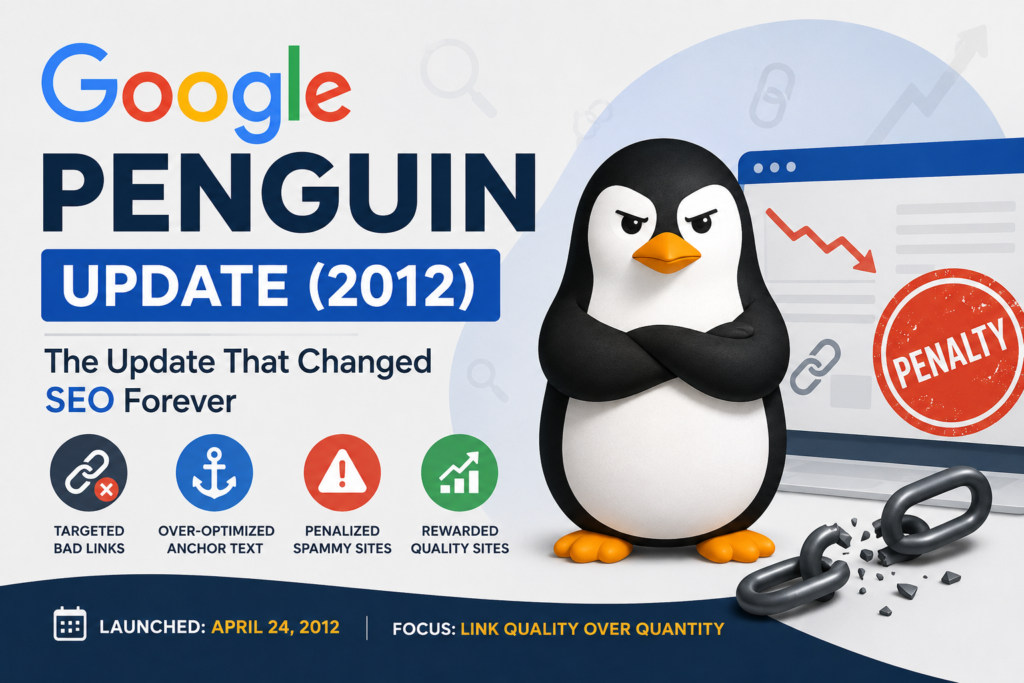
In April 2012, Google Penguin Update became one of the most influential algorithm updates in search engine optimization history. The update fundamentally changed how websites approached link building, anchor text optimization, and backlink quality.
Before Penguin, many websites manipulated Google rankings using spammy SEO techniques such as buying backlinks, excessive keyword-rich anchor text, and participating in link schemes. The Penguin update was designed to penalize such practices and reward websites with natural, high-quality backlink profiles.
Even today, Penguin remains a critical part of Google’s search ranking system and continues to influence modern SEO strategies.
What Is the Google Penguin Update?
The Google Penguin update is a webspam algorithm introduced by Google on April 24, 2012. Its primary objective was to identify and penalize websites that violated Google’s Webmaster Guidelines through manipulative link-building techniques.
Unlike previous algorithm changes that focused mainly on content quality, Penguin specifically targeted:
- Spammy backlinks
- Link farms
- Paid links
- Over-optimized anchor text
- Irrelevant backlinks
- Keyword stuffing in anchor text
- Private Blog Networks (PBNs)
Websites relying heavily on black-hat SEO practices experienced major ranking drops almost overnight.
Why Did Google Launch Penguin?
Before Penguin, many websites ranked highly by artificially inflating their backlink profiles. Quantity often mattered more than quality.
Common manipulative tactics included:
- Buying thousands of backlinks
- Using automated link-building software
- Comment spam on blogs
- Forum profile links
- Exact-match anchor text abuse
- Low-quality directory submissions
This created poor search experiences for users because low-quality websites often outranked valuable and informative content.
Google launched Penguin to improve search quality and ensure rankings were earned through relevance, authority, and trustworthiness rather than manipulation.
Major Effects of the Google Penguin Update
1. Massive Ranking Drops
Thousands of websites lost their rankings immediately after the update rolled out. Many businesses saw dramatic declines in organic traffic.
Sites heavily dependent on manipulative backlinks were hit the hardest.
2. Link Quality Became More Important Than Quantity
Penguin shifted SEO focus from acquiring large numbers of backlinks to earning relevant and authoritative links.
A few high-quality backlinks became far more valuable than thousands of spammy ones.
3. Anchor Text Optimization Changed
Before Penguin, SEOs frequently used exact-match anchor text such as:
- “cheap SEO services”
- “best digital marketing agency”
- “buy backlinks”
Penguin identified unnatural anchor text patterns and penalized websites that appeared manipulative.
Today, natural anchor diversity is essential.
4. Rise of White-Hat SEO
The update accelerated the shift toward ethical SEO practices, including:
- Content marketing
- Digital PR
- Natural outreach
- Authority building
- User-focused optimization
White-hat SEO became the long-term sustainable approach.
Common Reasons Websites Were Penalized
Spammy Backlinks
Links from irrelevant or low-quality websites became a major risk factor.
Examples include:
- Link farms
- Automated blog comments
- Spam directories
- Low-quality guest posts
Over-Optimized Anchor Text
Using the same keyword repeatedly as anchor text created an unnatural backlink profile.
For example:
- 80% exact-match anchors
- Commercial keyword repetition
- Manipulative keyword linking
Paid Links
Buying links solely for ranking manipulation violated Google’s guidelines.
Google became much more effective at detecting:
- Sponsored links without disclosure
- Paid guest posting networks
- Link exchanges
Irrelevant Link Sources
Backlinks from unrelated industries appeared unnatural.
Example:
A law firm receiving backlinks from casino websites or adult domains.
How to Recover from a Penguin Penalty
Step 1: Conduct a Backlink Audit
Analyze your backlink profile using SEO tools such as:
- Google Search Console
- Ahrefs
- SEMrush
- Moz
Identify:
- Toxic backlinks
- Spam domains
- Over-optimized anchor text
- Irrelevant links
Step 2: Remove Harmful Links
Contact webmasters and request removal of spammy links whenever possible.
Focus on:
- Paid links
- PBN links
- Low-quality directories
- Spam comments
Step 3: Use the Google Disavow Tool
If harmful links cannot be removed, submit a disavow file to Google.
This tells Google not to consider specific backlinks when evaluating your website.
Use this carefully because improper disavow actions can negatively impact rankings.
Step 4: Build High-Quality Links
Replace toxic links with natural authority-building strategies:
- High-quality content
- Guest posting on reputable sites
- Digital PR campaigns
- Industry partnerships
- Editorial mentions
Step 5: Improve Overall Website Quality
Penguin recovery is stronger when combined with:
- Better content quality
- Improved UX
- Faster page speed
- Strong internal linking
- E-E-A-T optimization
Is Penguin Still Relevant Today?
Yes. Although Penguin has evolved significantly since 2012, its principles remain deeply integrated into Google’s algorithm.
In 2016, Google introduced Penguin 4.0, making it:
- Real-time
- More granular
- Better at devaluing spam links instead of penalizing entire websites
Modern SEO still requires:
- Natural backlinks
- Relevant authority signals
- Ethical link-building practices
Best Practices to Avoid Penguin Penalties
To stay safe from Penguin-related issues:
Focus on Natural Link Building
Earn links through valuable content and genuine authority.
Diversify Anchor Text
Use branded, generic, and natural anchors instead of excessive exact-match keywords.
Avoid Black-Hat SEO
Do not purchase backlinks or participate in link schemes.
Audit Backlinks Regularly
Monitor your backlink profile to detect spam attacks or toxic links.
Prioritize Relevance
Seek backlinks from websites related to your niche or industry.